
Latin America · Network expansion
FTTH Expansion: Is an Empty Box Port Really Available?
Before buying materials for more subscribers, reconcile the installed box, port reservations, splitter outputs and optical design. An empty adapter is not an approved service path.
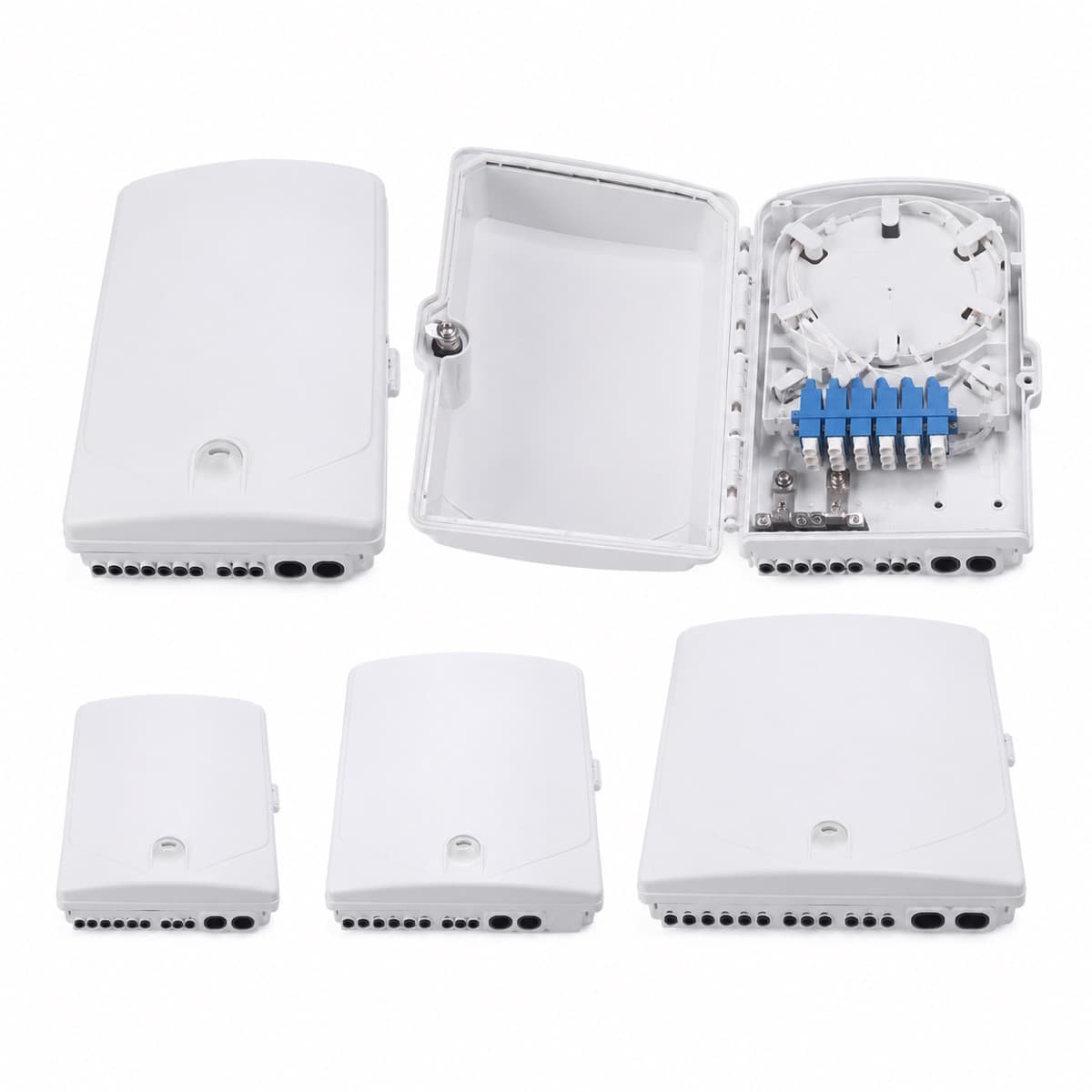
Direct answer: verify a complete path before promising a connection
For a Latin American ISP adding subscribers to an existing FTTH area, an unused-looking adapter is only the starting point. Confirm that it belongs to an available, approved optical path and that the installed box can accommodate the required drop and connections. Procurement should work from a reconciled capacity record, not the maximum port number in a catalogue. This is an expansion audit of installed equipment, not a guide to selecting a new box by its headline capacity.
Identify the actual box, not a similar photograph
Record the box ID, location, manufacturer or model and installed configuration. Ask the field team for a legible layout without exposing customer names or addresses in the supplier enquiry. Reconcile it with the operator's inventory. A housing may accept several configurations, so the catalogue maximum does not prove which splitter, trays or adapters are fitted in this unit.
Classify each port before counting it
Use mutually exclusive states such as active, reserved, faulty, unverified and confirmed available. Agree who can release a reservation and when the record was checked. A disconnected drop may still belong to a customer or planned order. For an illustrative 16-position register with 9 active, 3 reserved, 1 faulty and 1 unverified position, only 2 remain candidates for use. Those two are not saleable capacity until the optical and physical checks are complete.
Review the optical design separately
Have the operator's network engineer confirm the splitter arrangement, upstream path, equipment compatibility and loss budget for the proposed connections. FOA's FTTH design guidance explains why splitter losses belong in the link calculation. Replacing a splitter with a higher ratio is therefore not just a way to create more sockets. Do not copy a generic GPON loss allowance into a different system or treat a port count as an engineering approval.
Check the enclosure's remaining usable space
Inspect the installed tray occupancy, fibre routing, compatible adapters and entry seals under the operator's approved procedures. Nominal splice capacity, adapter capacity and cable-entry capacity describe different constraints. Existing fibres and reserve can leave less usable space than the empty housing specification suggests. Ask whether adding a drop would require disturbing active fibres or compromising the closure; the supplier cannot determine this from the exterior photograph alone.
Choose the material response to the actual bottleneck
If an approved path and suitable entry already exist, the purchase may concern compatible drop and termination materials. If physical space is exhausted, the operator may need an additional distribution point. If upstream capacity or optical design is the constraint, a larger empty box alone will not fix it. Record the engineer's decision before asking for alternatives so bidders price the same scope rather than different network assumptions.
Control the change on a live network
Keep the proposed work pack separate from the current port register. The operator should approve the work window, service protection and acceptance procedure; this purchasing guide is not permission to disconnect active fibres. After the authorized work, update port assignments and as-built records before making the new capacity available for sales. Otherwise a later team may allocate the same supposedly spare port twice.
What to send FTTH LATAM
Provide the approved additional connection count, installed box and interface details, drop construction, required quantities and destination. Ask for item-level compatibility confirmation rather than ordering by a generic '16-port box' label. Our product and factory information support the supply review; they do not certify remaining capacity in a live network. The product photograph is not a completed local expansion project.
FAQ: Can an empty adapter be counted as a free subscriber port?
Only after its assignment, optical path and physical installation conditions are verified and the operator releases it. Empty, unverified and available are different states.
FAQ: Can a higher-ratio splitter avoid a new box?
It requires a network-design and enclosure review. More outputs do not establish adequate optical budget, compatibility or safe working space.
FAQ: Must every box be replaced for an expansion?
No. First identify the limiting resource. Retain suitable installed equipment when the operator confirms it meets the expanded requirement; buy only the approved missing scope.
Installed-capacity review
| Layer | Record to reconcile | Do not infer |
|---|---|---|
| Assignment | Active, reserved, faulty, unverified and available ports | An empty socket is unassigned |
| Optical path | Splitter arrangement and approved link review | Additional outputs fit the existing budget |
| Physical fit | Trays, fibre routing, adapters and entries | Housing capacity equals installed spare capacity |
| Release | Operator approval and updated inventory | Procurement approval permits live-network work |
Before ordering expansion materials
- Identify each installed box and its actual configuration.
- Reconcile mutually exclusive port states and reservations.
- Obtain the operator's optical design decision.
- Confirm remaining tray space and suitable cable entries.
- Price the approved missing scope and compatible interfaces.
- Assign ownership for acceptance and inventory updates.
Related supply information
Optical design background
Build an expansion list from confirmed capacity
Send the country and service area, box IDs and models, current port map, reservations, existing split arrangement and the operator-approved expansion requirement. Remove subscriber personal information from shared records.
Send the Box Capacity Schedule