
Peru · Regional FTTH Procurement
FTTH Procurement Checklist for Regional ISPs in Peru
A staged procurement checklist for Peruvian regional ISPs to align feeder, distribution and drop materials with rollout zones, drum access, acceptance records and delivery dates.
Direct answer: buy by rollout zone and network layer
A regional ISP should divide procurement by rollout zone and then separate feeder, distribution, drop and passive-accessory quantities. Freeze the design basis, cable lengths, acceptance evidence and delivery date for each phase before manufacturing. This prevents one delayed accessory or inaccessible reel from holding back an otherwise complete activation area.
Use market growth as context, not as proof of a supplied project
OSIPTEL reported that fibre connections outside Lima and Callao grew 26.02% year over year to more than 1.73 million by the end of 2025. That indicates active regional demand, but it does not mean Jiaxin supplied those networks. Each buyer still needs a project-specific design, local permits, operator approvals and logistics plan.
Freeze one lot matrix for every rollout phase
For each zone, list the OLT or aggregation point, feeder route, distribution points, terminal coverage, estimated drops, spare ratio and activation date. Connect those fields to cable model, fibre count, unit length, reel number, boxes, splitters, closures and connectors. Mark design assumptions and the person allowed to approve changes.
Plan reels around roads, warehouses and field handling
Long reels reduce splices but can be difficult to unload or move on narrow regional roads. Confirm reel dimensions, gross weight, storage surface, lifting equipment, pulling sections and accessible splice locations. Tie each reel to a route section and delivery phase instead of ordering only a total kilometre quantity.
Keep feeder, distribution and drop specifications compatible
Feeder cable selection depends on route, capacity, duct or aerial installation and restoration strategy. Distribution design must match terminal density and branching. Drop cable, connectors and customer boxes must suit the final access method. Record fibre type, colour sequence, closure capacity and connector interface so materials bought in different phases remain compatible.
Separate coastal, Andean and jungle assumptions
Peru does not have one installation environment. Coastal routes may emphasize UV, dust and salt exposure; highland routes add elevation, temperature swing and difficult access; tropical routes add moisture, vegetation and road-season risk. Ask the network designer to approve the actual load and protection requirements rather than assigning one generic cable to every department.
Accept each shipment as a traceable phase
Before release, reconcile approved construction, reel schedule, routine optical records, readable labels, packing list and loading evidence. On arrival, inspect reel condition, identifiers and seals before storage or installation. Keep phase, zone and reel numbers in filenames so later faults or shortages can be traced without searching an unstructured photo folder.
RFQ checklist for a regional ISP
Provide department and delivery point; rollout zones and dates; topology; homes passed; route and installation method; feeder, distribution and drop quantities; fibre type and counts; unit lengths; passive BOM; marking; inspection records; packing; Incoterm; port or inland destination; and any operator or tender requirement. Unknown inputs should remain visible as open decisions.
FAQ: Should all rollout phases use one purchase order?
Not necessarily. One framework can control common specifications while releases are divided by zone and date. The important point is stable revision control and clear responsibility for changes, not the number of purchase orders.
FAQ: Can a supplier calculate the whole FTTH network from homes passed?
Homes passed is not enough. Split ratio, take-up, reserve capacity, route geometry, pole or duct condition, terminal density and operator rules affect the bill of materials. Use homes passed for early budgeting, then freeze quantities from the approved design.
FAQ: Does the cover image show a Peru project?
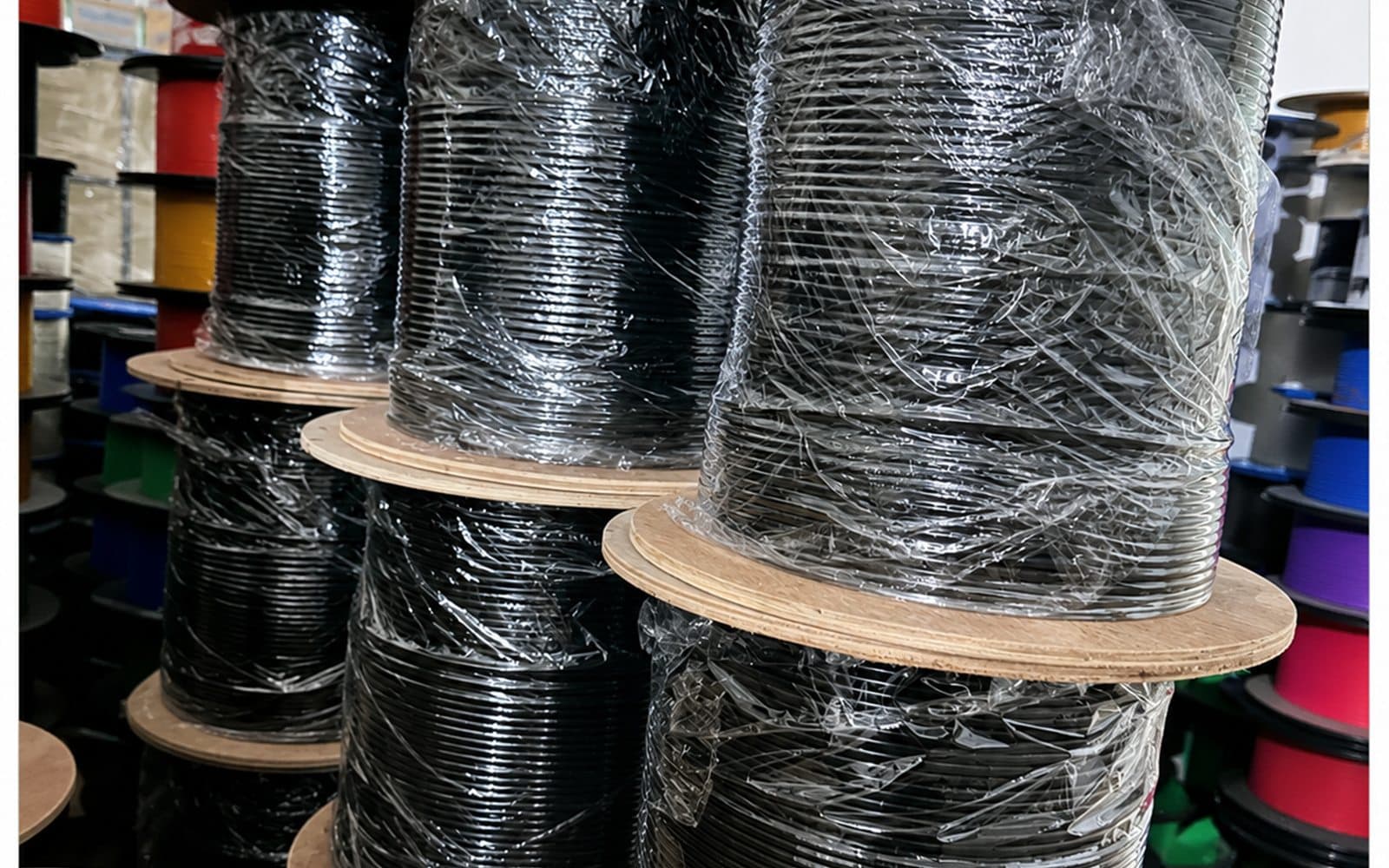
No. It is an authentic factory and dispatch photograph used to show grouped cable reels. It does not claim a specific Peruvian customer, location or installed network.
Build a phased FTTH supply list for Peru
Send the rollout zones, homes passed, network diagram, route lengths, installation method, target activation dates and receiving location. We can organize the cable and passive-material checklist by delivery phase.
Send Peru Rollout Data