Outdoor Cable Guide
Microduct and Blown Cable: When It Fits Latin American Projects
A project-evaluation guide to duct capacity, cable-to-microduct fit, route length, bends, installation equipment, testing and future expansion.
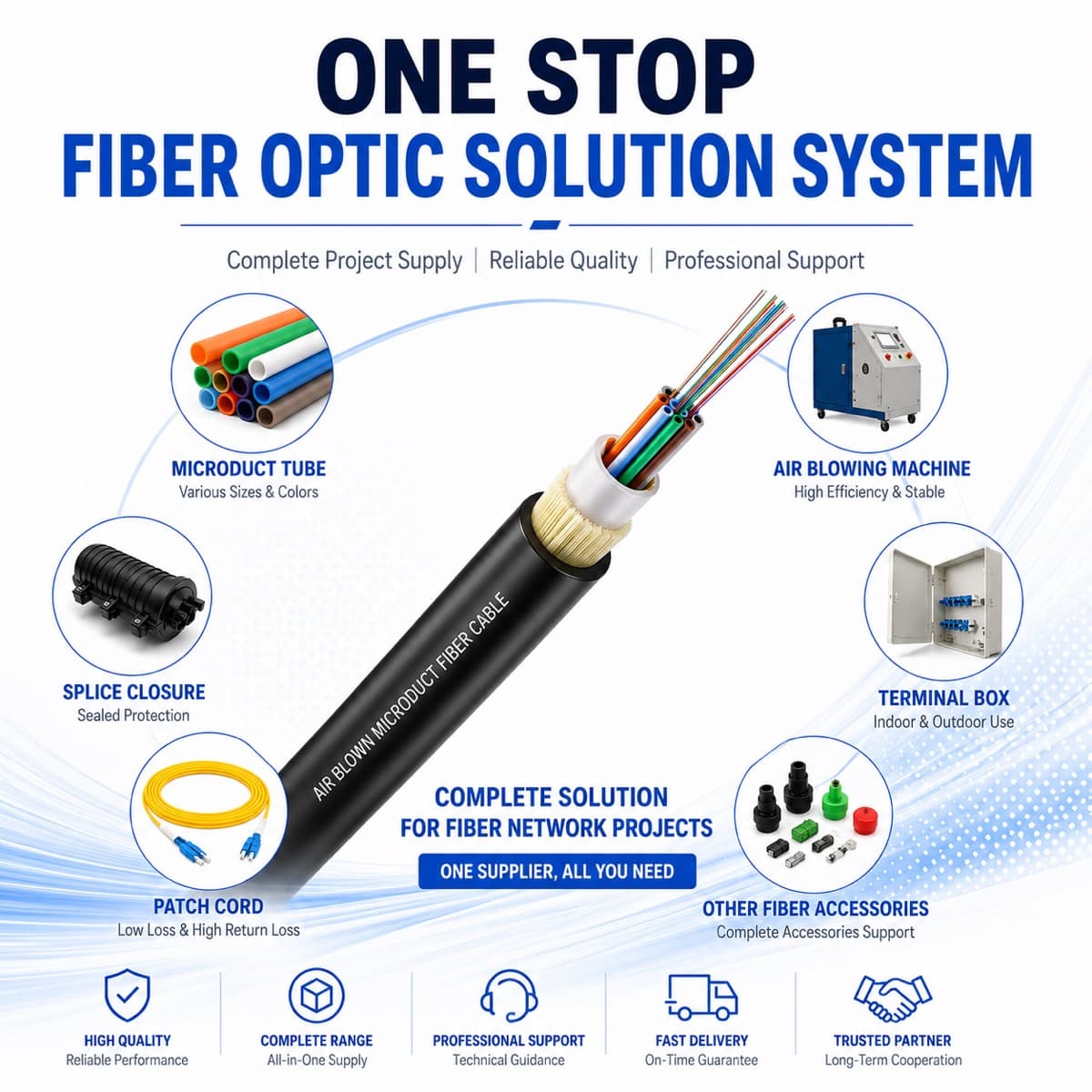
The system is more than a small cable
A blown-cable project combines the cable, one or more microducts, couplers, seals, closures, blowing equipment, compressor settings, lubricants where approved and a route designed for installation. Selecting only cable diameter ignores the friction, air flow, duct condition and pulling sections that determine whether the planned distance is achievable.
Use it when staged capacity has value
Microduct systems can support phased fibre deployment: install duct capacity during civil works and add cables as demand grows. This can be attractive where trenching is expensive or disruptive. The benefit depends on spare pathways remaining clean, continuous, documented and accessible. Empty ducts without sealing and route records may not provide usable future capacity.
Match cable and microduct dimensions
Confirm cable outside diameter and tolerance, microduct inside diameter, fill ratio, inner surface, pressure rating, route environment and manufacturer compatibility. Bigger clearance is not always better because air propulsion and buckling behaviour matter. Obtain a verified combination and trial when the route or product is new.
Design around bends and installation sections
Distance claims depend on straightness, elevation, bends, couplers, duct quality, temperature and equipment. Survey chambers and route geometry, define maximum bend radius and plan intermediate blowing points. A laboratory distance or supplier headline should not be treated as a guaranteed field result for a route with many bends or damaged duct.
Plan testing, sealing and records
Test duct continuity and pressure as specified before blowing, clean and calibrate the pathway, seal unused ducts and label both ends. Record route, duct colour, cable ID, installed length, blowing direction and any occupied section. Optical testing after installation should follow the network acceptance plan.
Compare total lifecycle cost
Include microduct, accessories, chambers, equipment, trained crew, route preparation, cable, testing and future interventions. Conventional duct cable may be simpler for a one-time link; microduct can be stronger where staged expansion, restoration options or limited civil-work windows justify the system. The decision should follow the rollout plan, not a general promise that blown cable is always cheaper.
Request a Quote
Send product model, fiber count, quantity, route and packing requirements. We will confirm specifications before production.
Request a Quote