
FTTH · Connector interfaces
SC/APC or SC/UPC? Check Every FTTH Connection Before Ordering
Specify the connector at each end of every connection. A port-to-port schedule prevents the wrong patch cords, adapters and test leads from entering an FTTH material order.
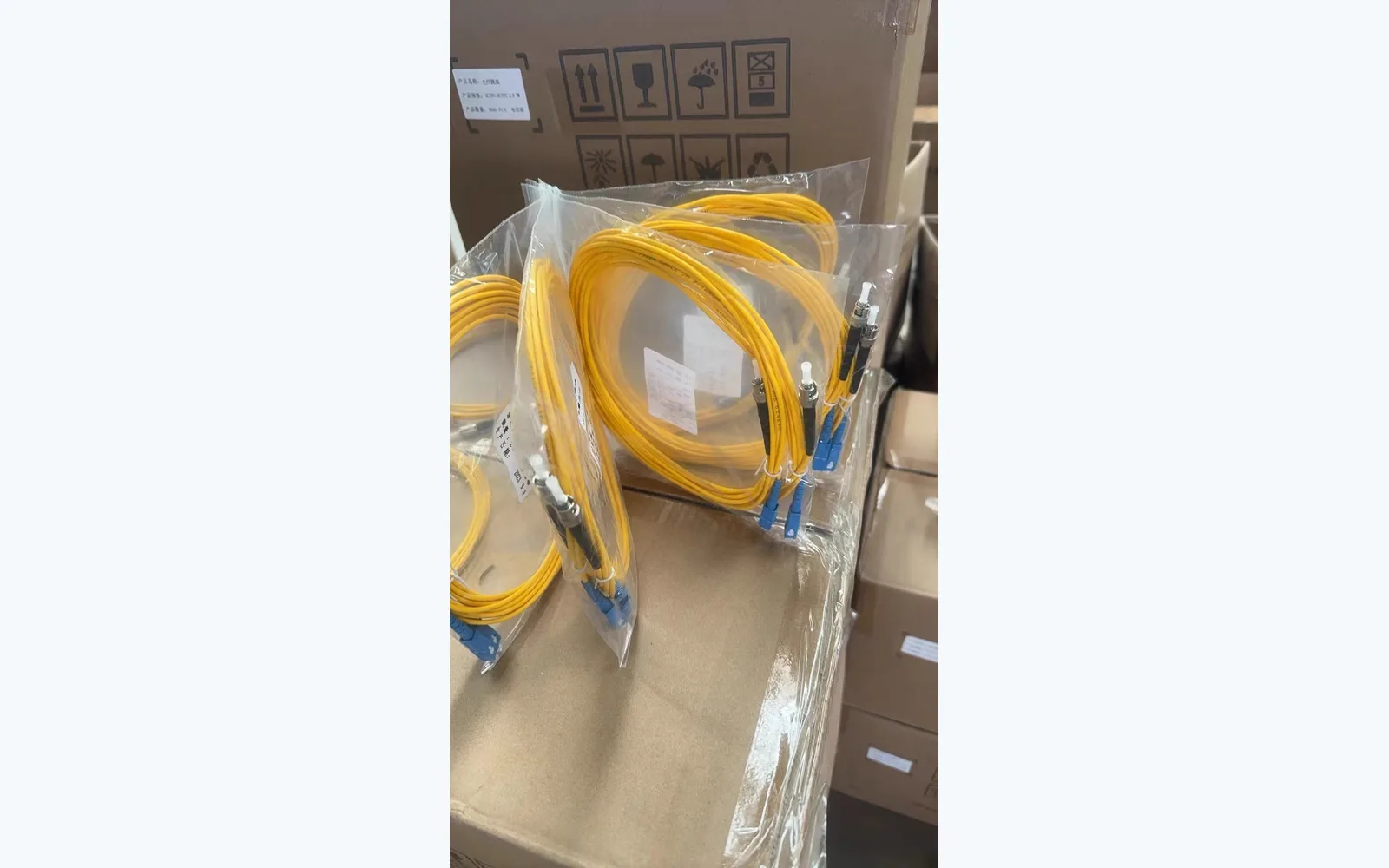
Specify every connection, not a colour for the whole network
For a Latin American ISP or FTTH contractor, a purchasing note such as all green connectors leaves important questions unanswered. The equipment port, splitter output, distribution point and customer terminal may have different documented interfaces. Record each connection as two endpoints and specify the connector required at each. This guide addresses physical connector matching; optical loss budgets and splitter ratios still need their own approved design.
Separate connector family from end-face polish
SC identifies a connector format, while APC and UPC describe different end-face polishing arrangements. Writing SC alone therefore does not complete the interface requirement. Obtain the actual equipment or component specification and record the full designation. Do not use a product photograph as the only evidence. A label that describes the fibre or patch cord jacket also does not establish the connector polish at both ends.
Do not directly mate APC and UPC
The FOA explains that APC and UPC connector ends should not be mated directly. An adapter that mechanically accepts a connector does not convert one polish into the other. When an existing port and a proposed patch cord disagree, correct the interface specification before purchasing or connecting them. Do not treat a brief continuity check as approval of an incompatible connection. Obtain matching connectors for each mating point and follow the equipment requirements.
A hybrid patch cord is a different situation
A cord can have APC at one end and UPC at the other when each end mates to its corresponding compatible port. The FOA describes this distinction for test connections. The important rule is local matching at each connection, not that both ends of every cord must always be identical. Write both ends explicitly in the order, along with connector family, fibre requirements and length. A general description such as hybrid cable is too vague for a controlled bill of materials.
Use colour as a check, not as the specification
Green and blue housings can help a receiving team sort familiar products, but colour should not replace the documented part reference and full connector designation. Verify labels and the supplier's drawing or datasheet against the order. If packaging, colour and specification disagree, hold the affected quantity for clarification rather than choosing whichever looks familiar. A consistent endpoint label helps installers identify the intended destination without assuming that every panel in the network uses the same interface.
Include adapters and test leads in the same review
A correct service patch cord does not solve a mismatched test setup. Include the tester interface, reference cords and any launch or receive leads required by the agreed test method. Confirm the full connector designation at every mating point. For adapters, ask for the offered reference and its stated application rather than relying on the word SC alone. Keep this schedule connected to the approved testing procedure so the installation and commissioning teams order compatible materials.
Make equipment substitutions visible
If an ONT, panel or splitter reference changes after the material list is prepared, review the affected endpoints. A familiar product category does not guarantee the same port specification. Identify the revised reference, compare its interface and adjust the linked patch cord and test materials before release. Keep quantities by endpoint pair so a partial equipment change does not accidentally alter every cord in the project. Record who accepted the new combination and which installation phase it covers.
Prepare an order that can be checked on arrival
Use one row per connection type, with endpoint A, endpoint B, complete connector designations, fibre requirement, length, quantity and accepted part references. FTTH LATAM can prepare a material offer against this schedule and identify missing inputs. The cover shows packaged patch cord examples; it is not an APC/UPC identification chart and does not demonstrate compatibility with a particular network. Ask for documentation for the exact items quoted.
FAQ: Can an SC adapter make APC compatible with UPC?
No. Mechanical fit does not convert the end-face polish. Match compatible connector ends at each mating point.
FAQ: Is an APC-to-UPC patch cord always wrong?
No. It can connect an APC port to a UPC port when each local connection is correctly matched and the remaining requirements are satisfied.
FAQ: Can we order only by green or blue colour?
Use the full connector designation and accepted part reference. Colour is a useful secondary receiving check, not a complete specification.
FAQ: Does every FTTH port need SC/APC?
Follow the actual equipment and network specification. Do not impose one connector choice on all ports without checking their interfaces.
Port-to-port purchasing matrix
| Connection item | Record before ordering | Release check |
|---|---|---|
| Endpoint A | Equipment reference and full port designation | Cord end A matches |
| Endpoint B | Equipment reference and full port designation | Cord end B matches |
| Patch cord | Both ends, fibre requirement and length | Exact offered part accepted |
| Adapter | Part reference and intended mating arrangement | No assumed polish conversion |
| Test connection | Tester and all reference-lead interfaces | Approved method has matching materials |
Before releasing the FTTH connector order
- List both endpoints for each connection type.
- Record connector family and polish from the actual specification.
- Check local mating compatibility at both cord ends.
- Include adapters, reference cords and test equipment interfaces.
- Recheck connections affected by equipment substitutions.
- Agree part references, labels, lengths and quantities by phase.
Related FTTH materials and planning
Technical reference
Send the port-to-port connection schedule
Share equipment references, port specifications, connector requirements at both ends, fibre type, lengths and quantities by installation phase. We can align the patch cord and adapter offer with the documented interfaces.
Send the Connection Schedule