
Latin America · Building quantities
Building FTTH: Measure Drop Lengths Before Ordering
Convert a building survey into a floor-by-floor drop cable order. Separate shared routes, individual connections, installation allowances and reserve stock so each delivery has a clear purpose.
Calculate the cable from the actual connection paths
For a Latin American ISP or building contractor, the useful drop quantity is the sum of defined subscriber routes and their approved allowances. Count the initial connections separately from all serviceable apartments. Then identify the cable construction and order format for each route. A floor count multiplied by one average length can support an early budget, but a final order needs a survey or explicitly accepted assumptions. This guide addresses quantity planning after the building's network and indoor-outdoor boundaries have been agreed.
Fix both ends of the segment before measuring
Identify the distribution terminal, floor point where applicable, apartment entry and optical outlet. ITU-T L.250 distinguishes building entry, floor distribution and subscriber-side elements, providing useful terminology for the plan. Your approved topology decides which of these are connected by one continuous cable. If a shared riser already reaches a floor terminal, do not multiply that same riser length by every apartment. Give shared cable and subscriber drops separate BOM lines and measurement boundaries.
Follow the permitted pathway
Measure the routed path through the approved tray, conduit, corridor and dwelling access, including the actual changes in level. Keep survey status beside each route: measured, estimated or blocked pending access. Show the drawing revision and who confirmed it. Where several apartments share a layout, verify the grouping with representative surveyed routes and record exceptions. A straight distance between endpoints can omit corridor detours or the chosen outlet location, leaving a finished assembly short even when the floor plan looks simple.
Separate working length, installed reserve and stock
For each connection, record routed length, required termination working length and approved installed reserve as distinct fields. Check where reserve can be stored within the supplied cable's requirements. Keep contingency stock outside this installed-length calculation. Adding slack to each apartment and then applying an unexplained blanket percentage to the whole order can count the same allowance twice. The project owner should agree the quantity basis and any uncertainty allowance before purchasing.
Use a transparent calculation, then choose the order format
Illustrative arithmetic only: a surveyed route of 18.4 m plus 1.2 m of combined termination working length and 2.0 m of approved installed reserve requires 21.6 m before any separately agreed measurement allowance. These example values are not installation recommendations. For bulk cable, allocate the cut and check remaining usable reel lengths. For a finished assembly, select an agreed length variant that covers the requirement and can be accommodated at the endpoints. Record the length datum and tolerance; rounding every route to an arbitrary standard length can create avoidable stock and storage problems.
Distinguish a finished assembly from a cut length
A preconnectorized drop needs the reference points used to measure its finished length, connector interfaces and any protected end that must pass through the pathway. A field-terminated drop needs the agreed working lengths and termination materials. Keep those two order types on separate lines even if they use the same fibre count. Our earlier preconnectorized-versus-spliced guide helps select the method; this schedule turns the selected method into quantities that purchasing and the installer can reconcile.
Group deliveries around the installation sequence
List building, floor, terminal and subscriber group with quantities for the first activation phase. Keep later connections and maintenance stock separately identified. Group finished lengths into approved SKUs where that simplifies handling, and show which route IDs each SKU covers. For bulk cable, prepare a cut plan that respects required continuous lengths instead of relying only on total metres. Labels and packing lists should preserve the building, phase and length references so the warehouse can issue the intended materials.
Use the first installed routes to improve the next batch
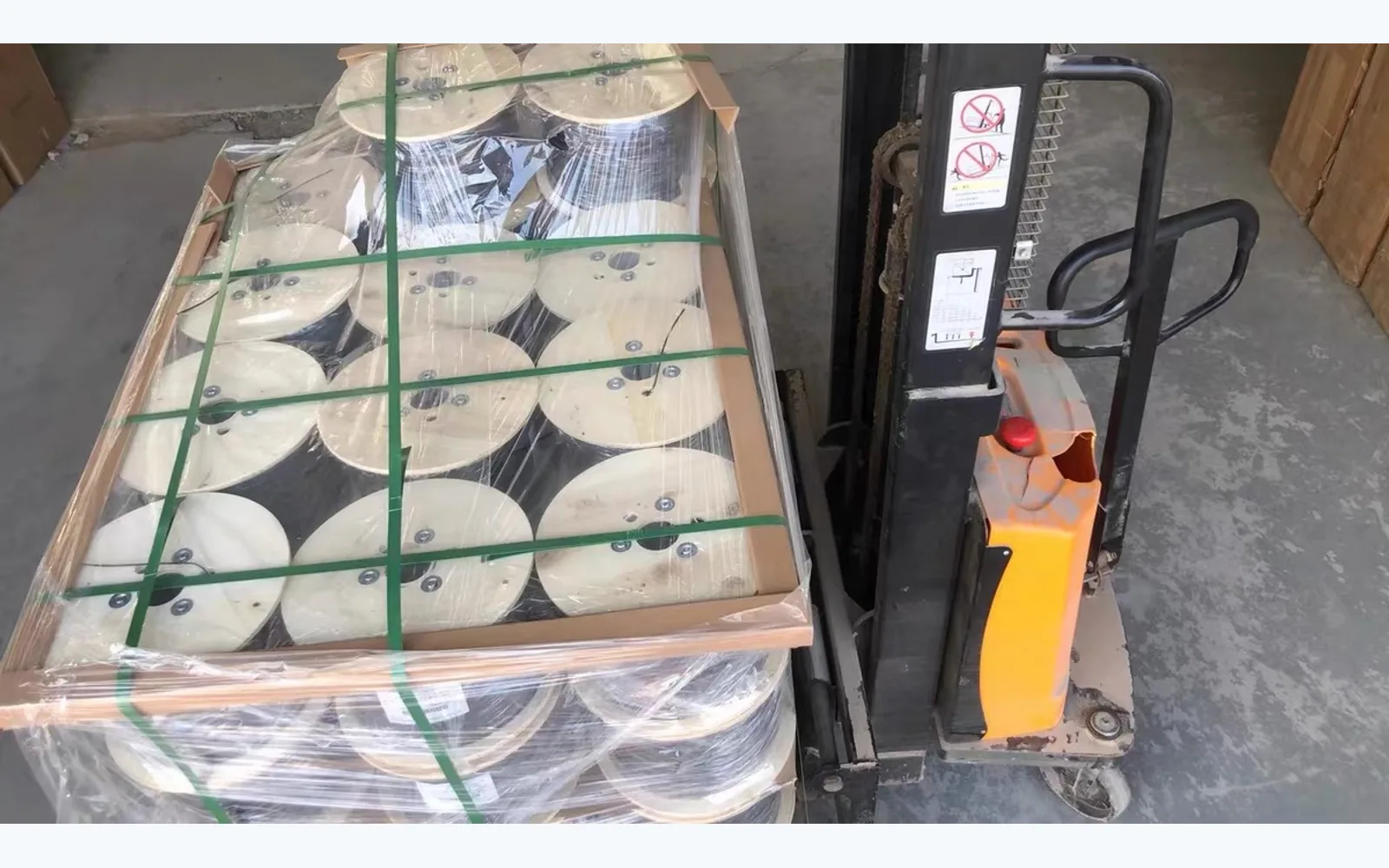
Compare surveyed and actual used lengths from the first representative connections. Record route changes, excess stored cable, short allocations and material left on reels. Review affected length groups before the next purchase release. FTTH LATAM can prepare cable and related material quotations from the controlled schedule in Spanish or English. The cover shows factory reel packing and does not identify a local building, prove a particular drop construction or prescribe an installation storage method.
FAQ: Can we quote from apartment count and an average length?
Yes, as a budget estimate with the assumptions stated. Before ordering fixed lengths, confirm representative routes, exceptions, termination points and the approved allowance basis.
FAQ: Should every apartment include the complete building riser length?
Only if its approved individual cable actually follows that entire continuous path. Where a shared riser and floor terminal are used, count those shared sections separately.
FAQ: Is there a universal percentage for spare drop cable?
No single percentage fits every building and rollout. Distinguish installed reserve, survey uncertainty, unusable cut remnants and replacement stock, then agree each required quantity.
FAQ: What happens if an outlet moves after we order?
Update the affected route ID and compare the new requirement with the allocated cut or assembly. Approve any substitution and revise the packing or installation schedule before the next release.
Building drop length schedule: fields for each order line
| Field | What to record | Quantity error it helps prevent |
|---|---|---|
| Route identity | Building, floor, terminal, outlet and drawing revision | Duplicating shared cable or omitting a connection |
| Measured path | Actual pathway length and survey status | Treating a straight-line estimate as a final measurement |
| Installed allowances | Working length, reserve and approved storage location | Counting reserve twice |
| Order format | Bulk cut plan or finished-length SKU, datum and tolerance | Ordering an unusably short or unsuitable assembly |
| Rollout quantity | Initial connections, later phases and separate stock | Buying every future connection in the first batch |
Six steps from floor plan to purchase quantity
- Mark the endpoints and distinguish shared cable from individual drops.
- Measure representative routes and record each unresolved exception.
- Agree working lengths, installed reserve and a separate stock allowance.
- Assign a bulk cut plan or approved finished-length variant to every route group.
- Split quantities by building and activation phase and define packing labels.
- Review the first installed routes before releasing the next batch.
Related cable and building planning
Network terminology and planning background
Turn the floor survey into a cable order
Send the country, building and floor plans, terminal locations, surveyed apartment routes, initial connection quantities, approved allowances and preferred termination method. We can organize a length-and-quantity quotation with packing identified by building and rollout phase.
Send the Building Length Schedule